


2027–2028 Steigmann Perio-Implant Continuum|Taipei


Course overview
The deeper the clinical work, the clearer it becomes: there is rarely only one answer. From 2027 to 2028, the Steigmann Perio-Implant Continuum returns with a new design: the five core modules remain the spine, now joined by international guest faculty and new extended content. Five modules. Four sessions. Every one with a different professional perspective in the room.
The Continuum connects five sequential hands-on modules with clinical principles, case discussion and practice. It suits clinicians who want bone augmentation, the aesthetic zone, prosthetic soft-tissue development, complications and vertical augmentation inside one decision pathway.
Course information
- DatesFrom 2027/03
To 2028/11, 5 modules in 4 sessions - VenueTaipei, Taiwan
- Guest faculty5 international guest faculty
Teaching alongside Dr. Marius Steigmann - FeeContact our team
Register now and our team will be in touch
Schedule and modules
Perio-Implant Continuum | Modules 1–5
- M1 · 2027/03/08–10 (Mon–Wed)Soft Tissue Management for Bone Augmentation
Guest faculty: Dr. Adam Pióro - M2 · 2027/11/17–19 (Wed–Fri)Soft Tissue Management for the Aesthetic Zone
Guest faculty: Dr. Larissa Steigmann - M3+4 · 2028/03/29–31 (Wed–Fri)Prosthetic Soft Tissue Development × Complications and Full Arch Restoration
Guest faculty: Dr. Ionuț Brânzan, Dr. Diana Boangar - M5 · 2028/11/22–24 (Wed–Fri)Soft Tissue Management for Vertical Augmentation
Guest faculty: Dr. Cristian Dinu
International guest faculty
Every session is taught by Dr. Marius Steigmann together with international guest faculty, each bringing a different clinical perspective.


Module highlights
Module 1 | Soft Tissue Management for Bone Augmentation
Connect tissue thickness and site anatomy with flap design, tension-free closure and wound stability in bone augmentation.
- Biotype & surgical decisions: Compare thin and thick tissues, then relate the surgical approach to the site and augmentation needs.
- Tension-free closure: Link flap release, adaptation and tissue elasticity to the conditions for stable primary closure.
- Site-specific flap design: Explore palatal sliding flaps in the maxilla and PPF, VBF and Steipod concepts in the mandible.
- Suturing & wound stability: Relate suturing strategies to tissue tension, flap adaptation and closure.
- Thickness, elasticity & keratinized tissue: Consider tissue thickness, mobility and keratinized tissue as part of the augmentation plan.
Module 2 | Soft Tissue Management for the Aesthetic Zone
Connect the anterior soft tissue profile with incision design, flap selection, papilla management and suturing.
- The aesthetic tissue profile: Begin with the peri-implant tissue profile and the aesthetic goal.
- Incisions & flap selection: Match incision and flap choices to GBR, tissue enhancement, keratinized tissue and mobility.
- A repertoire of flap approaches: Explore EBF, roll and pedicle flaps, alongside soft tissue approaches to implant uncovering.
- Papilla maintenance & reconstruction: Distinguish papilla preservation, reconstruction and the creation of a papillary illusion.
- Suturing in the aesthetic zone: Plan suturing together with flap adaptation and the desired tissue contour.
Module 3 | Prosthetic Soft Tissue Development
Start with the restorative goal and connect implant position, abutments, provisional restorations and emergence profiles.
- Prosthetically driven planning: Plan single and multiple implant positions around the individual restorative and aesthetic needs.
- Designing tissue support: Relate abutment and pontic design, plus crown margins, to soft tissue support.
- Emergence profile development: Explore how crown and abutment contours influence tissue form and aesthetics.
- Provisionals & tissue development: Connect wax-ups, try-ins, mock-ups and provisional restorations within the treatment sequence.
- Chairside & laboratory coordination: Consider abutment selection for single and multiple implants across chairside and laboratory workflows.
Module 4 | Soft Tissue Complications and Full Arch Restoration
Connect peri-implant soft tissue complications with restorative solutions and full-arch treatment planning.
- Peri-implant tissue recession: Examine the management and repair of gingival recession around implants.
- After papilla loss: Consider tissue development and reconstruction after papilla loss.
- Prosthetic tissue solutions: Connect surgical and restorative perspectives when considering soft tissue solutions.
- Tissue development across implants: Explore tissue development around multiple anterior implants and the design of provisionals.
- Full-arch treatment planning: Integrate aesthetic demands, provisional restorations and tissue development in full-arch planning.
Module 5 | Soft Tissue Management for Vertical Augmentation
Relate vertical augmentation anatomy to incision, flap and suturing strategies in the mandible and maxilla.
- Anatomy & grafting materials: Consider anatomical implications and grafting materials when planning vertical augmentation.
- Mandibular tissue management: Compare tissue biotypes and explore buccal and lingual flap management.
- Augmentation volume & flap strategy: Relate small and high-volume augmentation to flap mobility and coverage.
- The maxilla & aesthetic zone: Explore incision and flap approaches in the posterior maxilla and anterior aesthetic zone.
- Site-specific suturing: Consider tension and repositioning sutures within site-specific closure strategies.
Curriculum overview. Daily sequence, demonstration format and practice materials follow the final course notice. Modules 3 and 4 share one session.
Why this design
This new design came from 2026—from Zucchelli & Steigmann: The Masters' Debate. Facing the same case, two masters chose different paths. What mattered was not who won, but whether every clinical choice could survive the question. So this time, we wrote that thinking into the structure of the Continuum.
The Continuum is one path that runs from technique to judgment—from soft tissue fundamentals to implant therapy, complex reconstruction and complication management; from "I can perform the procedure" to "I understand why I chose this approach." The extensive hands-on work is where judgment grows clearer, one procedure at a time.
In February 2024, the first faculty AMS ever invited was Dr. Marius Steigmann. Over the two years that followed, from Taipei to Romania, we completed the full Continuum—Module 1 through Module 5. Many who finished the full series chose to come back, because when you return with more cases behind you, the person sitting in that room is no longer who you were two years ago.
A true mentor does not only make you better at what you do. They make you think deeper.
Speaker|Dr. Marius Steigmann

The series is taught by Dr. Marius Steigmann, with international guest faculty teaching alongside him at each session. His clinical background, teaching and past AMS courses are on his speaker page.
Featured videos
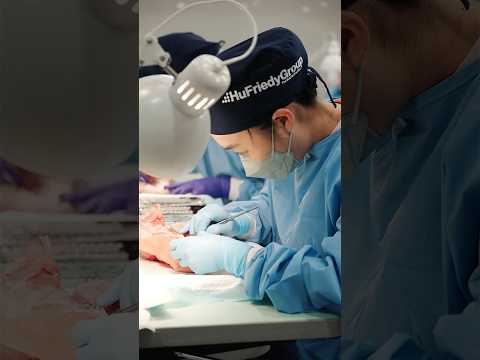 0:55CourseHighlights | 2024 Steigmann Hands-On Module 1
 0:41CourseCourse highlights | 2024 Steigmann PPF Technique
 0:43InterviewLecturer interview | Dr. Marius Steigmann
 1:30InterviewMasters' dialogue | Zucchelli × Steigmann
 2:16ReflectionsAttendee reflections | 2024 Steigmann Module 1
 2:21ReflectionsAttendee reflections 01 | 2024 Steigmann Lecture
From past courses
Scenes from Dr. Steigmann's earlier AMS courses: lectures and hands-on sessions.


- Overturns old habits, sparks new ideas | Dr. Jeff Wang · Steigmann lectureWhat sets Dr. Steigmann apart is, of course, his Mucosal Detachment Technique, and above all that he created his own instruments. Most of us learned suturing techniques from textbooks. His new methods and ideas basically overturn the way we used to work and think, so they inspire a lot of new ideas. Even if you have attended many different bone grafting courses, you will surely still learn new ideas and techniques.
- Guided step by step through each surgery | Dr. Hao-Hsiang Teng · Steigmann hands-on courseI am very happy to participate in Dr. Steigmann's course organized by Yong Chieh and Hu-Friedy. Dr. Steigmann is a renowned international expert in flap management. In the nine-day series of courses, the greatest gains are not just surgical techniques, but also the way the instructor guides us step by step on how to think through and conduct a surgery.
- Circulation decides GBR success | Dr. Howard Lin · Steigmann lecturePrimarily, I think you can learn Dr. Steigmann's techniques for Mucosal Detachment. This flap technique varies slightly from how we usually perform GBR, offering doctors another option. Typically, when performing GBR, doctors might first consider the methodology or the materials used. After Dr. Steigmann's course, the focus shifts towards circulation, which is actually crucial for the success of GBR. A famous saying of his is "Think twice": before any decision, think about your soft tissue, your incision technique, and how to preserve the circulation of the flap.
- Plan first, then go step by step | Dr. Yu-Hsin Huang · Steigmann hands-on courseIn the past, we might not have scrutinized every step of a surgery so carefully. This course let us examine, step by step, where we can do better. Dr. Steigmann explained every detail meticulously: how to plan ahead before treatment, then proceed step by step with greater precision to secure the outcome. This AMS course brings many invited international instructors. We don't have to fly abroad to attend these courses; we can receive the most comprehensive training right here in Taiwan. I think it's a fantastic experience.
- A master's course without going abroad | Dr. Renyeong Huang · Steigmann lectureWhat I find most intriguing about Dr. Steigmann's lecture is that it eliminates the need for the arduous journey abroad to attend his course. He is a master of international calibre, with many cases and unique methods that can solve problems faced by people in the East.
- Not one technique, but how to think | Dr. Chang-An Lien · Steigmann hands-on courseThe best part about Dr. Steigmann's course is that he provides us with a way of thinking. The focus is not actually on learning a single technique, because if you learn one technique and try to use it in every situation, you will run into big problems in some cases. Therefore, the key is to master the techniques and then understand the thinking process behind them: what is suitable for different situations. He explains every detail of the procedures clearly, including very basic things like how to tie knots, to help us avoid additional risks of failure in surgery.
Who is this continuum for?
Clinicians who want bone augmentation, the aesthetic zone, prosthetic soft-tissue development, complications and vertical augmentation inside one decision pathway. Five progressive modules combine clinical principles, case discussion and hands-on practice.
When and where is it held?
From 2027/03 to 2028/11: 5 modules in 4 in-person sessions in Taipei, Taiwan — M1 2027/03/08–10, M2 2027/11/17–19, M3+4 2028/03/29–31 and M5 2028/11/22–24.
What language is it taught in, and who teaches it?
English. Dr. Marius Steigmann teaches with five international guest faculty: M1 Dr. Adam Pióro, M2 Dr. Larissa Steigmann, M3+4 Dr. Ionuț Brânzan and Dr. Diana Boangar, M5 Dr. Cristian Dinu.
What does it cost?
Please contact our team for the fee. You can register now on the AMS registration system and our team will be in touch.
Register now!


